Art Therapy & EMDR with Cathy Ward
A creative, compassionate approach to healing from trauma and finding new possibilities.
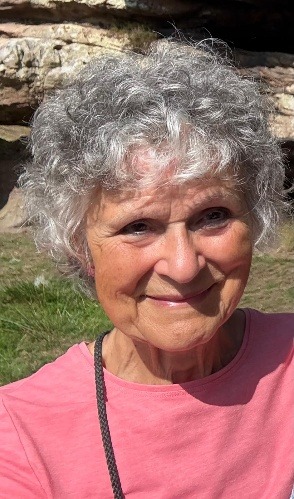
At this exciting point in my life and career, I am opening up my practice to people who would like to free themselves from traumatic memories, difficult experiences and self-doubts that may be holding them back.
I am a HCPC-registered Art Therapist/Art Psychotherapist and EMDR therapist, working on-line with adults and children.
My approach is strengths-based, trauma-informed, inclusive and decolonising, with an emphasis on the wisdom of the body and our nervous system. Rather than fitting people into a particular therapeutic model, I shape the work around the needs of each person I meet.
And although therapy can involve painful experiences, I believe it can also be accessible, engaging, creative — and frequently fun.
How I work
I draw particularly on Art Therapy and EMDR (Eye Movement Desensitisation and Reprocessing).
Both can offer ways of working with experiences that may be difficult to put into words. Art therapy provides opportunities to explore through images and creative processes, while EMDR can help people process traumatic or distressing memories that continue to affect their lives.
The work we do together will depend on you — your particular circumstances, your strengths and vulnerabilities, and what you hope might change.
Experience
I worked in the public sector for 25 years before moving into freelance practice with children and adults.
Since 2022 I have combined my private practice with pro bono work with refugees, continuing a longstanding commitment to working alongside marginalised communities.
My practice continues to develop. Most recently, I have completed training in G-TEP (Group Traumatic Episode Protocol) and R-TEP (Recent Traumatic Episode Protocol), EMDR approaches that can also be used with people affected by recent and ongoing traumatic experiences.
Writing & developing practice
I have a longstanding interest in the relationship between creativity, culture and psychological healing.
I contributed to publications on Art Therapy, Race and Culture and Process in the Arts Therapies (Jessica Kingsley Publishers, 1999).
More recently, in February 2026, “The Hammock”, an article co-written with a client and an art therapy colleague, was published in EMDR Therapy Quarterly. It describes our experience of bringing EMDR and art therapy together in the therapeutic work.
Could we work together?
You don't need to know whether Art Therapy or EMDR is the right approach before contacting me.
We can begin with a free informal conversation about what is troubling you, what you would like to be different, and whether working together feels right.
If you are troubled by traumatic memories, anxiety, self-doubt or relationship difficulties, you are very welcome to get in touch.
Email:
cathy@cathyward.ukCathy Ward
British Association of Art Therapists: registration no 46585
The Health and Care Professions Council: registration no AS00903
EMDR Association: no W154
Testimonials:
From a client:
Our sessions really did me a lot of good. I love the way Cathy works. She is deeply sympathetic, and very supportive. She also takes account of the body's physical memory and how that feeds directly into the mind. The results have been very positive; I am much more at ease with myself and those around me and more able to deal with stressful situations. My nearest and dearest have noticed the positive changes. Thank you, Cathy. Sept 2026
From a colleague:
I have had the opportunity to work with Cathy in her capacity as an EMDR therapist. She is tenacious and effective in her practice, while remaining warm, compassionate and deeply caring. She combines professional expertise with a genuine and consistent commitment to the wellbeing of those she works with. I have great respect for both the quality of her clinical work and the humanity she brings to her therapeutic relationships. Sept 2026
From a client:
It was great to have somebody who was grounded and present to be able to sit with me for the first time; and to process many things that had never been spoken about or dealt with. And lessen the day to day impact on me of those traumatic or heavy things that I have gone through. You provided me with tools that I can lean upon in times of distress. Things I can use that have stayed with me.
As someone in a wheelchair, it’s the first time I’ve felt seen and heard properly for who I am – I think all of my life I’ve not felt seen and heard and I know that when you’re in the wheel chair, we feel like society doesn’t notice us or we get treated not quite right, but there was never any of that, I felt you accepted me for who I am.